recover
The other half of performance
Most of wellness culture is built around effort — training harder, working longer, pushing further. Recovery is the part that gets skipped. But the body doesn't adapt, repair, or reset during the effort itself; it does that afterward, if it's given the right conditions to do so. That's the gap THIA Restore is built to close.
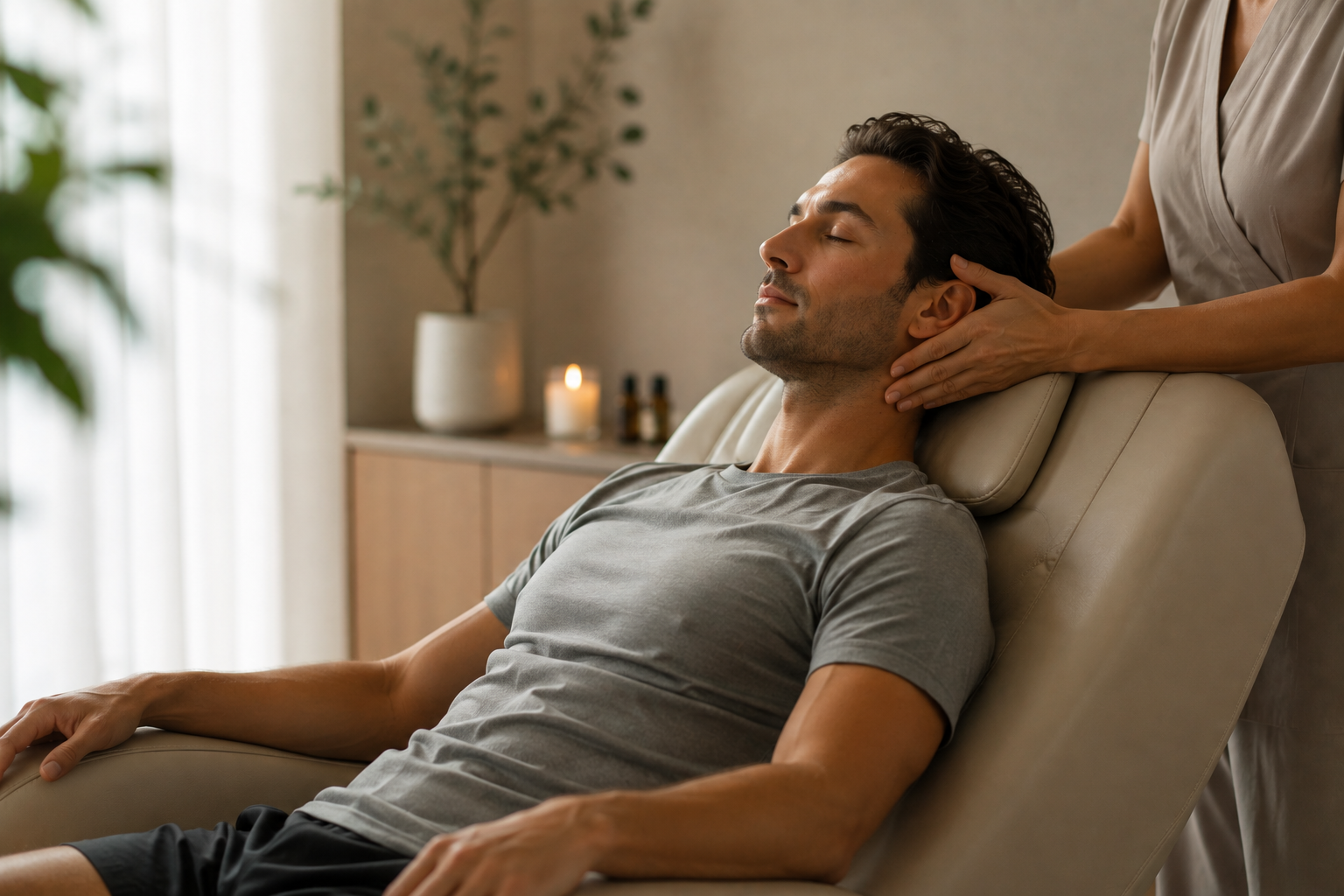
Recovery Services are a curated set of therapies — heat and cold, compression, light, touch, and nervous-system regulation — designed to help the body and mind do what they're already trying to do: repair tissue, clear fatigue, calm the stress response, and restore deep, genuine sleep. They're not indulgence. They're maintenance for people who ask a lot of themselves — frequent travellers, athletes, executives, and anyone whose week doesn't leave much room to fall behind.
People first, technology in service
Every therapy above is led by a trained practitioner — not a screen, and not a machine you're left to operate alone. That's a deliberate choice, and it's what sets THIA Restore apart: premium human touch and genuine human connection come first; technology is there to enhance what our practitioners do, not to replace it.
Infrared panels, cold plunge, compression, and biofeedback all make a session more consistent and more precise — but it's a practitioner reading how your body is actually responding, adjusting pace, pressure, and sequence in real time, that makes a recovery session work. A massage still means trained hands on tired muscle, supported by data rather than substituted by it. The equipment raises the floor; the person raises the ceiling.
It's also, frankly, why the results hold up. Recovery is as much about feeling cared for and understood as it is about the physiology — and that's something no protocol delivers on its own.
What counts as a recovery service
Recovery isn't one treatment — it's a toolkit, and different tools solve different problems. At THIA Restore, every service is chosen because there's a clear, evidence-backed reason for it to be there.
Contrast therapy — heat and cold, in sequence. Alternating infrared heat with cold plunge drives blood flow to fatigued muscles, then flushes it away, which is thought to reduce the perception of soreness and support faster return to activity. A 2025 systematic review in PLOS ONE found that cold-water immersion produced a significant reduction in perceived stress twelve hours after exposure, along with a 29% reduction in sickness absence among regular cold-shower users — modest effects, honestly reported, but real ones.
Heat exposure on its own. Regular sauna use is one of the more surprising success stories in recovery science. A 21-year Finnish cohort study of over 2,300 adults, published in JAMA Internal Medicine (Laukkanen et al., 2015), found that men who used a sauna four to seven times a week had a 50% lower risk of cardiovascular death and a 40% lower risk of death from any cause, compared with those who used one once a week. It's one of the largest, longest-running bodies of evidence behind any recovery modality.
Compression therapy. Pneumatic compression boots use rhythmic pressure to move fluid and metabolic waste out of tired legs. Research published in the Journal of Sport Rehabilitation found the technique reduces perceived muscle soreness and swelling following endurance exercise — a fast, passive way to take the edge off a heavy training block or a long-haul flight.
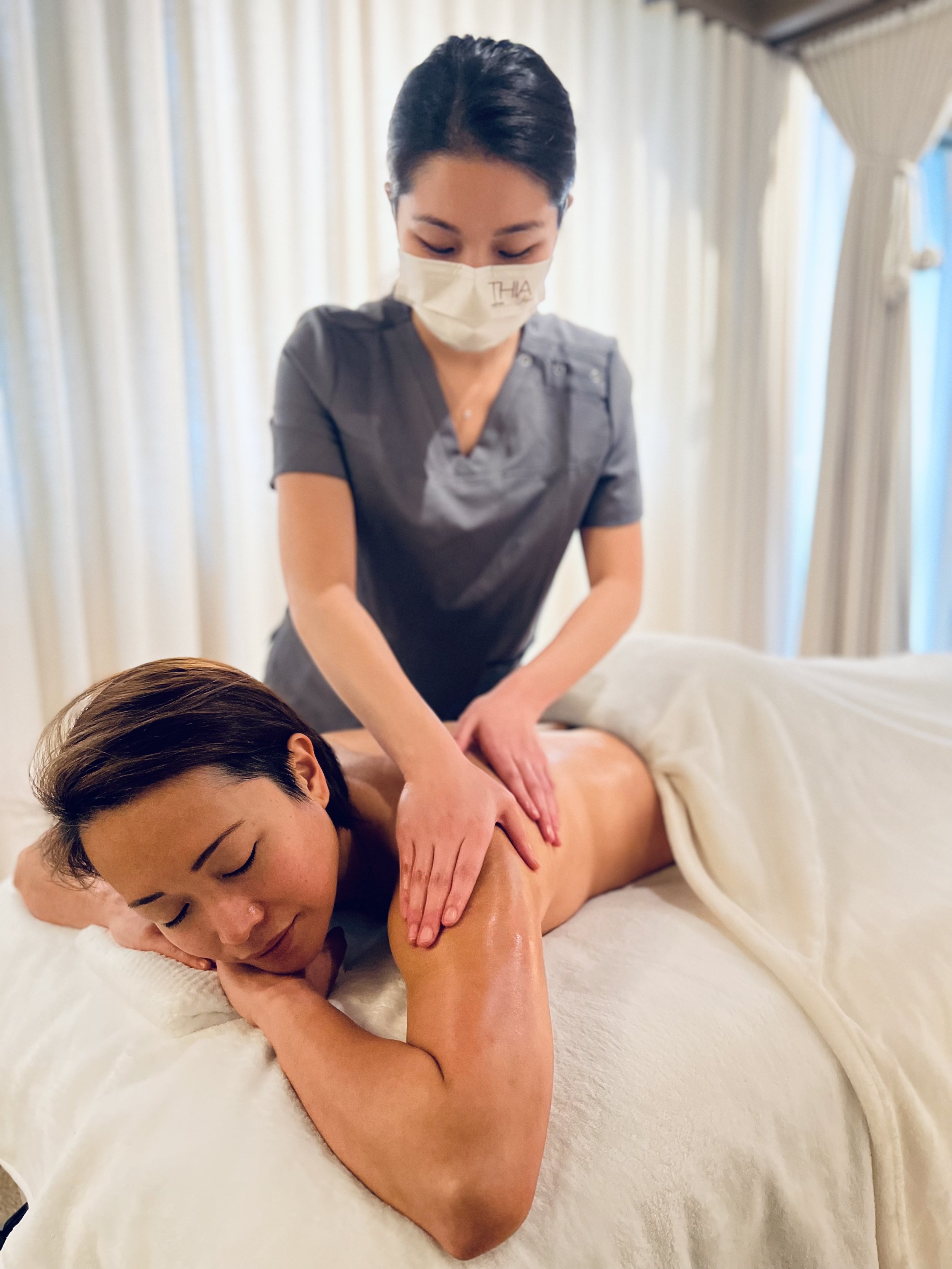
Massage therapy. The oldest recovery tool is still one of the best-studied. A 2017 meta-analysis in Frontiers in Physiology, pooling 11 studies and over 500 participants, found that massage after strenuous exercise significantly reduced muscle soreness — most notably 48 hours later — improved muscle strength, and lowered creatine kinase, a blood marker of muscle damage.
Light-based therapies. Red light (photobiomodulation) is increasingly used to support cellular recovery in fatigued muscle, while bright, correctly-timed light exposure is one of the most effective tools for shifting the body's internal clock — the basis of THIA's approach to jet lag and travel fatigue. Chronobiology research consistently shows that strategic light exposure, timed against a traveller's origin and destination time zones, can meaningfully speed circadian re-alignment after long-haul flights.
Sleep and nervous-system regulation. Recovery isn't only physical. Calming an overstimulated nervous system — through guided breathwork, weighted or blackout eye coverage, and biofeedback-style relaxation — helps the body shift out of "alert" mode and into genuine rest. A 2017 randomised study in Critical Care found that patients who consistently wore an eye mask and earplugs overnight got significantly more deep sleep than those who didn't — more than double, on average; a 2021 meta-analysis in Scientific Reports found heart-rate-variability biofeedback produced a meaningful reduction in stress-related symptoms, with effects comparable to established talk-therapy approaches.
Why it benefits you
You recover faster, not just feel better. The value of these therapies isn't only relaxation — though that matters too. It's measurable: less soreness, less inflammation lingering after exertion, and a faster return to full capacity, whether that capacity is a match, a boardroom, or a long flight home.
Your body handles stress better over time. Chronic, low-grade stress — the kind that comes from travel, deadlines, and disrupted sleep — keeps the nervous system in a state that makes real recovery hard to reach. Contrast therapy, breathwork, and biofeedback all work on the same target: shifting the body out of that state, deliberately and repeatedly, so resilience builds rather than erodes.
Sleep, the recovery multiplier. Almost everything else on this list works better when sleep is intact. Poor sleep blunts muscle repair, immune function, and mood regulation — which is why THIA's Deep Sleep and Jet-Lag protocols exist as a category of their own, not an afterthought.
It fits the way you actually live. These aren't half-day rituals. Every service is built as a short, focused session — designed to slot into a stopover, a lunch break, or the hour before a big meeting, so recovery becomes something you do often, not something you schedule once a quarter.
How THIA Restore brings it together
Individually, each of these therapies has evidence behind it. Combined and sequenced correctly, they're more than the sum of their parts — which is why THIA Restore builds them into short, guided programmes rather than leaving guests to self-select from a menu. A typical pathway might move from infrared heat, into a coached cold plunge, into a calming, nervous-system-regulating finish — mirroring the "heat, cold, calm" sequence that shows up across the sauna, cold-immersion, and biofeedback research above.
These pathways are delivered by trained practitioners, supported by technology that keeps the experience consistent every time — so the outcome doesn't depend on luck, timing, or which therapist is on shift.
THIA Restore — Restorative · Curated · Elevated.
Built to fit, wherever you are
Not every guest wants — or has time for — the same experience, which is why THIA Restore is offered across four tiers: Reserve, our most complete, spa-level experience; House, a fuller multi-room offering for residences and private clubs; Studio, a focused, single-modality space for regular use; and Lounge, a fast, high-frequency format built for travel and transit environments. The science underneath each tier is identical — only the scale and setting change.
SourceS
Cain, S. M., et al. (2025). Effects of cold-water immersion on health and wellbeing: A systematic review and meta-analysis. PLOS ONE. journals.plos.org
Laukkanen, T., Khan, H., Zaccardi, F., & Laukkanen, J. A. (2015). Association Between Sauna Bathing and Fatal Cardiovascular and All-Cause Mortality Events. JAMA Internal Medicine. Summary via ScienceDaily
Journal of Sport Rehabilitation (2021). The Effects of Intermittent Pneumatic Compression on the Reduction of Exercise-Induced Muscle Damage in Endurance Athletes.journals.humankinetics.com
Chen, X., et al. (2017). Massage Alleviates Delayed Onset Muscle Soreness after Strenuous Exercise: A Systematic Review and Meta-Analysis. Frontiers in Physiology. frontiersin.org
Demoule, A., Carreira, S., Lavault, S., et al. (2017). Impact of earplugs and eye mask on sleep in critically ill patients: a prospective randomized study. Critical Care. PubMed
Pizzoli, S. F. M., et al. (2021). A meta-analysis on heart rate variability biofeedback and depressive symptoms. Scientific Reports. PMC
Note: these citations point to peer-reviewed research on the general therapies THIA Restore offers (contrast therapy, heat exposure, compression, massage, light-based therapy, and nervous-system regulation). They describe the modality studied, not a specific THIA protocol, brand of equipment, or in-house outcome data.